

How Often Should You Release Podcast Episodes?
Decide how often to release podcast episodes with practical schedules, production tradeoffs, audience expectations, and consistency rules.
Last updated May 25, 2026. Comparison guidance is current as of 2026.
Summary
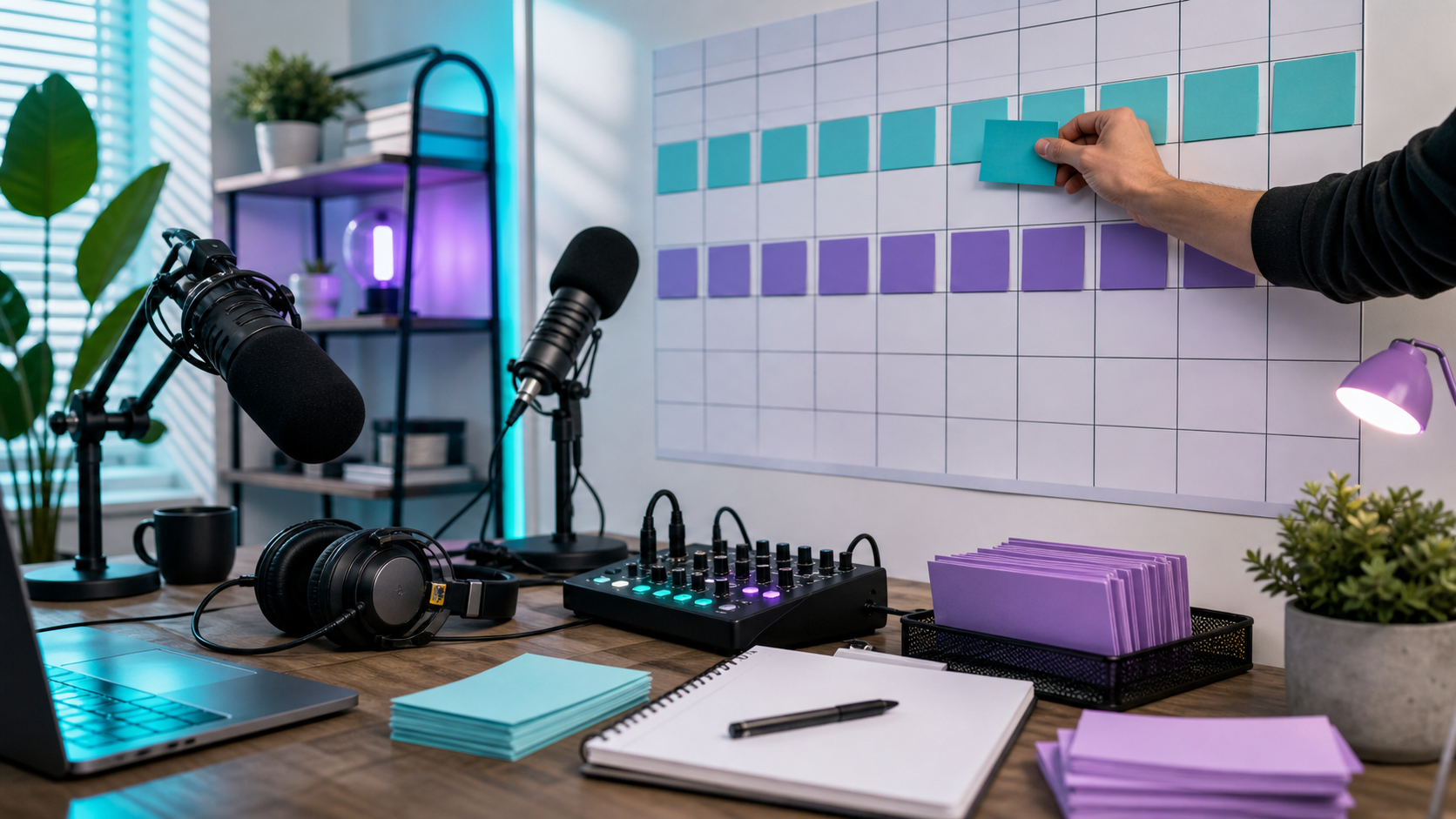
Most podcasts should release weekly or every two weeks if they can maintain quality consistently. Weekly publishing builds habit and gives more chances to learn from audience data. Biweekly publishing is better when episodes require heavy research, guest coordination, editing, or video production. Seasonal publishing works when the show is highly produced or campaign-based.
The right podcast release schedule is the one your team can sustain without lowering quality. If each episode also creates clips, blog posts, and social assets, plan the schedule around the full production workload using for podcasters, AI Shorts Maker, and content repurposing workflows.
Table of contents
- Quick answers
- Weekly releases
- Biweekly releases
- Seasonal releases
- How repurposing changes the schedule
- Release schedule checklist
- Znippet POV
- FAQ
Quick answers
- How often should a podcast release episodes? Weekly is ideal for many shows, biweekly is more sustainable for complex production, and seasonal works for limited series.
- Is consistency more important than frequency? Yes. A reliable biweekly show is usually better than a weekly show that misses releases.
- Should you publish clips between episodes? Yes, clips can keep the show visible between full episodes if they are accurate, useful, and platform-ready.
Weekly releases
Weekly publishing is a strong default for interview shows, creator podcasts, brand podcasts, and business shows with a reliable production process. It gives listeners a habit and gives the team more data about topics, guests, titles, and clips.
Choose weekly if:
- You can record ahead.
- Editing does not block the calendar.
- Guests are easy to book.
- The host has enough topic depth.
- Promotion assets can be created on time.
- Quality does not drop under the schedule.
Weekly episodes work best with a production buffer of at least two to four finished or nearly finished episodes.
Biweekly releases
Biweekly publishing gives the team more room for research, editing, review, and promotion. It is often a better choice for shows with high-profile guests, complex video production, deep reporting, or small internal teams.
Choose biweekly if:
- Episodes need careful prep.
- The host has limited recording time.
- Audio or video editing takes several days.
- Each episode becomes multiple clips and posts.
- The team wants stronger promotion for each release.
For clip-heavy teams, pair this with how to turn podcast episodes into blog posts and social content.
Seasonal releases
Seasonal podcasts publish in batches or limited runs. This works well for narrative shows, educational series, launches, internal campaigns, and resource-intensive productions.
Seasonal publishing helps when:
- Episodes need research or scripting.
- The team wants to record before launch.
- The show supports a campaign or product cycle.
- Quality matters more than constant presence.
The risk is losing audience habit between seasons. Use clips, newsletters, and short updates to keep the feed active.
How repurposing changes the schedule
Release frequency should account for the total content package, not just the full episode. One weekly episode can create several short-form videos, a newsletter, a blog post, and social copy. That makes the schedule more valuable, but also more demanding.
If the team cannot produce full episodes weekly, publish full episodes every two weeks and use clips in between. Captions and silence removal can help clips feel finished, while pricing can help teams compare production support options.
Spotify's Partner Program announcement is a reminder that platform strategy can affect publishing decisions for eligible creators. YouTube's podcast guidance is also relevant when episodes are published as videos or organized into podcast playlists.
Release schedule checklist
Before choosing a frequency, answer:
- How many hours does each episode take from idea to publish?
- How many episodes can you record ahead?
- Who approves final edits?
- How many clips does each episode need?
- What happens when a guest cancels?
- Can the editor meet the turnaround every week?
- Does the audience expect depth or speed?
- Which platform matters most?
Apple's podcast requirements are useful to check before launching or changing show assets, metadata, and distribution basics.
Znippet POV
The best release schedule is the one that leaves enough room for the full content package. If weekly episodes force rushed clips, sloppy captions, or skipped promotion, a biweekly show with strong repurposing may produce better results.
We usually think in production capacity, not only episode cadence. One solid episode with several accurate short clips can keep a podcast visible between releases without asking the host to record constantly.
FAQ
Is weekly podcast publishing necessary?
No. Weekly publishing helps build habit, but it is not necessary if the team cannot sustain quality. Biweekly or seasonal schedules can work well when they are consistent.
Is it bad to publish podcast episodes irregularly?
Irregular publishing makes it harder for listeners to form a habit and harder for teams to measure performance. If your schedule changes, communicate it clearly.
Should a new podcast launch with multiple episodes?
Launching with two or three episodes can give new listeners more to sample, but only do this if it does not weaken the production buffer for future releases.
Can clips replace full podcast episodes?
Clips can support discovery, but they usually should not replace full episodes unless the show strategy is built around short-form content. Clips work best as entry points into deeper episodes.
How far ahead should podcasts be recorded?
Most teams benefit from having at least two episodes in progress or ready. Weekly shows often need a larger buffer than biweekly or seasonal shows.
Sources and further reading
Background links used to check product details, terminology, and practical context.
- Apple Podcasts requirements
Apple Podcasts for Creators
Used as background context for product details, platform requirements, or workflow comparison.
- Create a podcast in YouTube Studio
YouTube Help
Used as background context for product details, platform requirements, or workflow comparison.
- YouTube Shorts creation guidance
YouTube Help
Used as background context for product details, platform requirements, or workflow comparison.
- Spotify Partner Program announcement
Spotify Newsroom
Used as background context for product details, platform requirements, or workflow comparison.
- Podcast measurement guidelines
Interactive Advertising Bureau
Used as background context for product details, platform requirements, or workflow comparison.
- Advertising and marketing guidance
Federal Trade Commission
Used as background context for product details, platform requirements, or workflow comparison.
- Captions and subtitles
W3C Web Accessibility Initiative
Used as background context for product details, platform requirements, or workflow comparison.
- Adobe Audition user guide
Adobe
Used as background context for product details, platform requirements, or workflow comparison.
- Riverside official website
Riverside
Used as background context for product details, platform requirements, or workflow comparison.
- Descript official website
Descript
Used as background context for product details, platform requirements, or workflow comparison.
- OpusClip official website
OpusClip
Used as background context for product details, platform requirements, or workflow comparison.
Keep comparing workflows
Related comparison guides
Turn long-form footage into publishable clips
Use Znippet AI Shorts Maker to find strong moments, add readable captions, remove dead air, and export clips for Shorts, Reels, TikTok, and social channels.