

How Long Should a Podcast Episode Be?
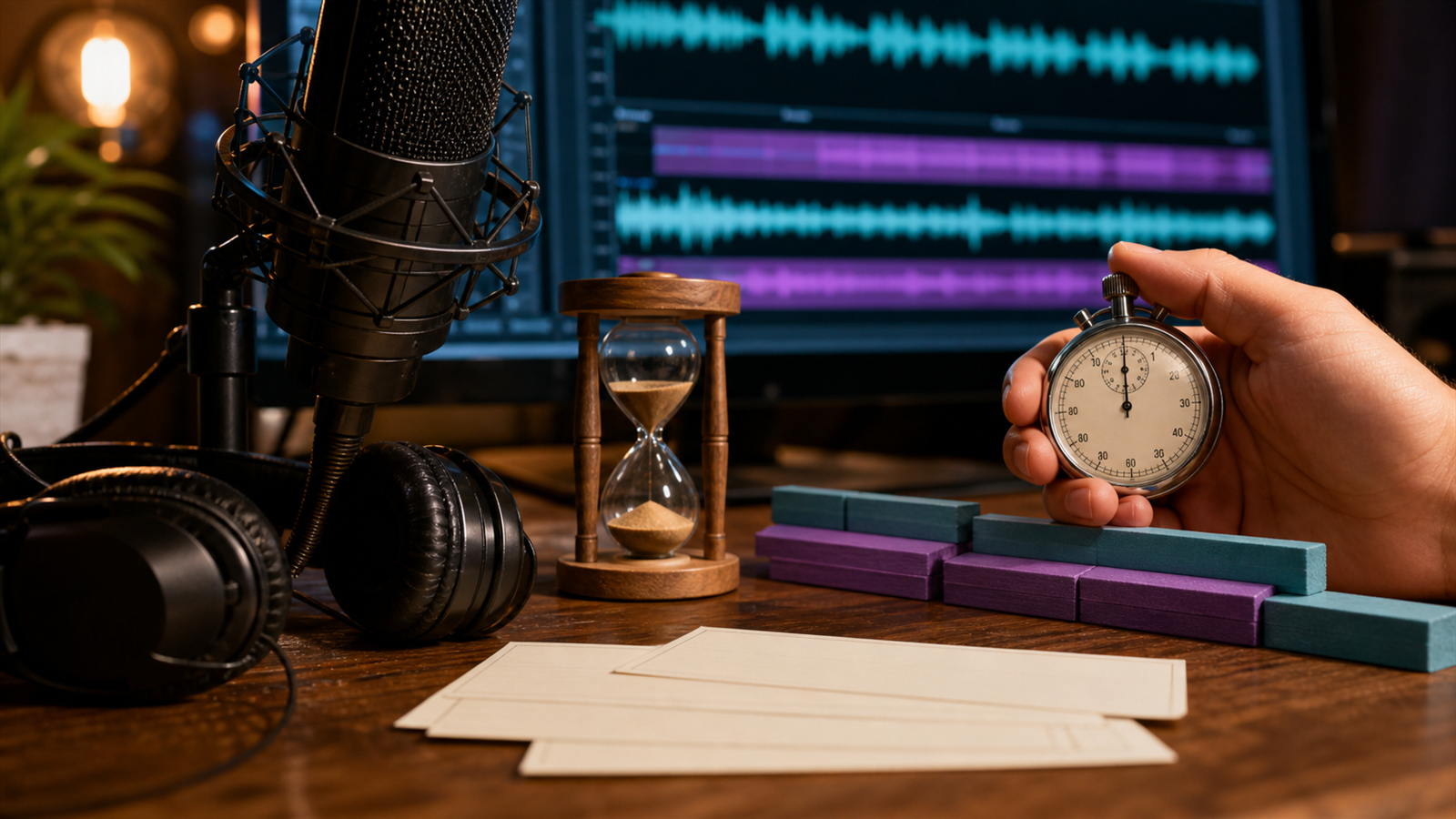
Decide how long a podcast episode should be based on audience intent, format, topic depth, publishing cadence, and production capacity.
Last updated May 25, 2026. Comparison guidance is current as of 2026.
Summary
A podcast episode should be as long as it needs to deliver the promised value without wasting the listener's time. For many shows, 20 to 45 minutes is a practical range. Short expert updates may work in 8 to 15 minutes, while deep interviews and narrative shows may need 45 to 90 minutes.
The right length depends on format, topic depth, audience habit, publishing cadence, editing quality, and repurposing goals. Do not choose a length because another show uses it. Choose the shortest length that still feels complete.
Use this with podcaster workflows, AI Shorts Maker, and podcast repurposing. For video podcast distribution, check YouTube's podcast guidance. For platform metadata and publishing constraints, review Apple's podcast requirements.
Table of contents
- Quick answers
- Recommended Episode Lengths by Format
- How to Choose the Right Length
- When Short Episodes Work Best
- When Long Episodes Work Best
- Edit for Value, Not Duration
- Znippet POV
- FAQ
Quick answers
- Best default range: 20 to 45 minutes for many interview, business, and educational shows.
- Best short format: 8 to 15 minutes for focused solo insights, news updates, or tactical lessons.
- Best long format: 45 to 90 minutes for deep interviews, narrative work, or loyal audiences.
- Most important rule: Cut anything that does not support the promise of the episode.
Recommended Episode Lengths by Format
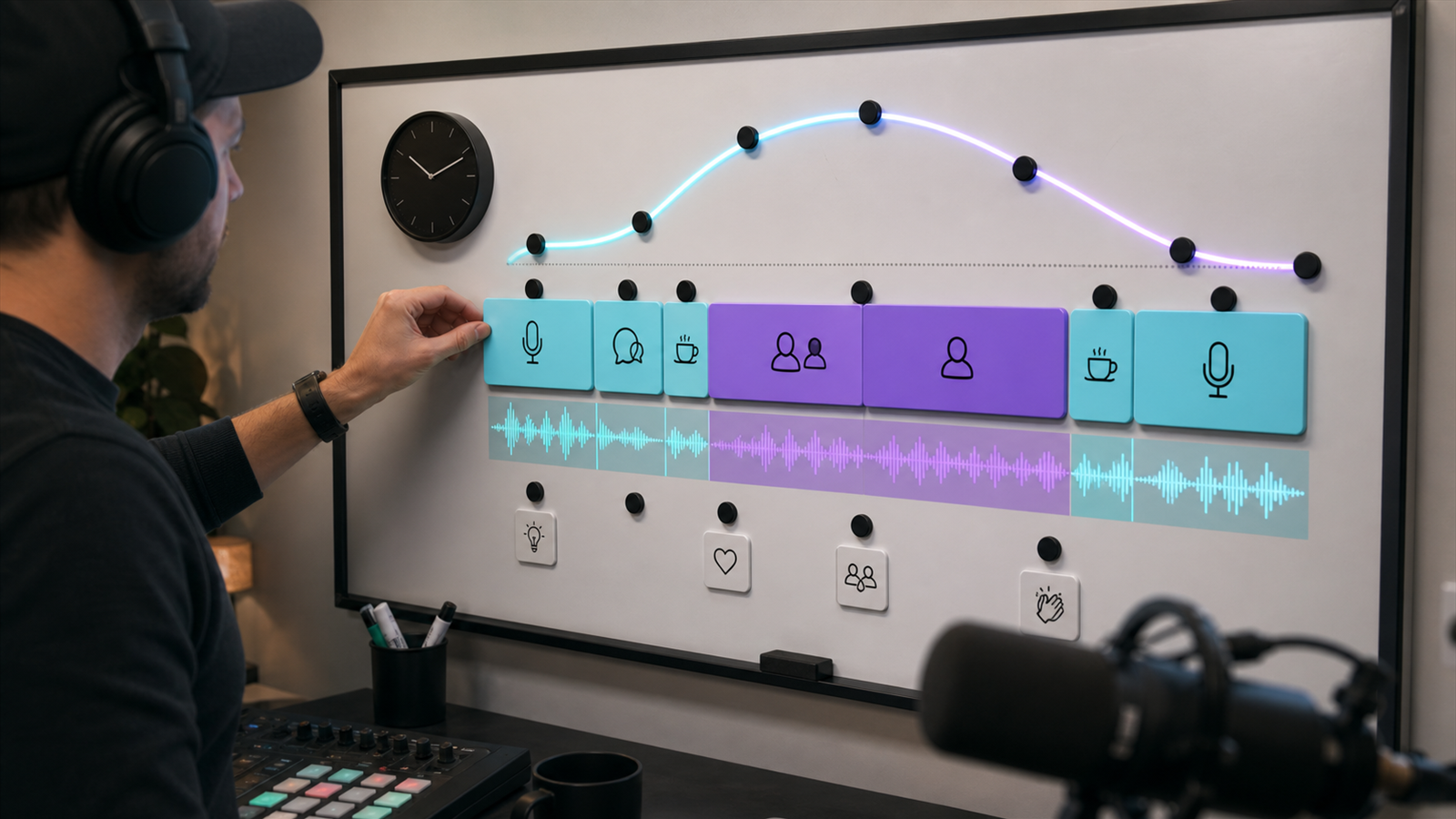
Episode length should match the format:
- Solo tip or commentary: 8 to 20 minutes.
- Expert interview: 25 to 60 minutes.
- News recap: 10 to 30 minutes.
- Narrative episode: 20 to 60 minutes.
- Roundtable: 35 to 75 minutes.
- Deep-dive interview: 60 to 90 minutes.
- Internal or customer education podcast: 10 to 30 minutes.
These are benchmarks, not rules. A 12-minute episode can feel too long if it repeats itself. A 70-minute interview can feel efficient if every section earns attention.
How to Choose the Right Length
Use the episode promise as the constraint. If the title promises "how to price a podcast sponsorship," the episode should answer that clearly before exploring side stories.
Ask:
- What question should the listener be able to answer afterward?
- How much context is necessary?
- Does the audience listen while commuting, working, watching, or researching?
- How often do you publish?
- Can your team edit and promote this length consistently?
- Will the episode also become clips, blog posts, or newsletters?
If you publish video podcasts, check YouTube's podcast documentation because packaging and viewing behavior may affect structure. If you distribute through Apple, keep Apple's podcast requirements in mind for metadata and presentation.
When Short Episodes Work Best
Short episodes work well when the audience wants one answer quickly. They are useful for solo experts, tactical lessons, product education, and frequent publishing schedules.
Short episodes are easier to:
- Record consistently.
- Edit quickly.
- Package into clips.
- Turn into blog posts.
- Fit into busy listener routines.
The tradeoff is depth. If the topic requires examples, nuance, or guest stories, a short episode can feel thin.
When Long Episodes Work Best
Long episodes work when attention is earned through depth, story, or relationship. Interviews, research-heavy shows, and personality-led podcasts often need more time.
Long episodes are useful when:
- Guests have complex experience.
- Stories need room.
- The audience expects depth.
- The episode can create many clips.
- The show builds trust through extended conversation.
Long episodes require stronger editing. Cut repetition, unclear tangents, and low-value sections. Then use the best moments for short-form distribution through captions and silence removal and the AI Shorts Maker.
Edit for Value, Not Duration
Do not pad an episode to hit a target length. Also do not cut useful material only because an arbitrary limit says the episode should be short.
Instead, edit against these standards:
- The first five minutes earn attention.
- Each section adds a new idea, example, or story.
- Tangents either support the topic or get removed.
- The ending gives closure or a clear next step.
- Clips can stand alone without changing the speaker's meaning.
When an episode has several strong sections, turn them into supporting assets. The podcast-to-blog guide and team repurposing workflow explain how one long recording can become multiple useful formats.
Znippet POV
Episode length and clip strategy should be planned together. A longer interview can be a good decision if it contains several complete ideas that can become short-form clips, newsletter sections, or blog answers. A shorter episode can be better when the topic has one clear promise and extra discussion would dilute it.
Znippet fits after that editorial decision. It can help find and prepare clip-worthy moments, but it should not be used as an excuse to keep a weak section in the full episode. The stronger workflow is to edit the episode for listener value first, then repurpose the best standalone moments for social distribution.
FAQ
Is 30 minutes a good podcast length?
Yes. Thirty minutes is a strong default for many shows because it gives enough room for substance without demanding a long listening session.
Are shorter podcast episodes better?
Shorter episodes are better when the topic is narrow and the audience wants speed. They are not automatically better for interviews, narrative shows, or deep expert content.
Should every podcast episode be the same length?
Not exactly, but episodes should feel consistent. A predictable range helps listeners know what kind of time commitment the show expects.
Sources and further reading
Background links used to check product details, terminology, and practical context.
- Apple Podcasts requirements
Apple Podcasts for Creators
Used as background context for product details, platform requirements, or workflow comparison.
- Create a podcast in YouTube Studio
YouTube Help
Used as background context for product details, platform requirements, or workflow comparison.
- YouTube Shorts creation guidance
YouTube Help
Used as background context for product details, platform requirements, or workflow comparison.
- Spotify Partner Program announcement
Spotify Newsroom
Used as background context for product details, platform requirements, or workflow comparison.
- Podcast measurement guidelines
Interactive Advertising Bureau
Used as background context for product details, platform requirements, or workflow comparison.
- Advertising and marketing guidance
Federal Trade Commission
Used as background context for product details, platform requirements, or workflow comparison.
- Captions and subtitles
W3C Web Accessibility Initiative
Used as background context for product details, platform requirements, or workflow comparison.
- Adobe Audition user guide
Adobe
Used as background context for product details, platform requirements, or workflow comparison.
- Riverside official website
Riverside
Used as background context for product details, platform requirements, or workflow comparison.
- Descript official website
Descript
Used as background context for product details, platform requirements, or workflow comparison.
- OpusClip official website
OpusClip
Used as background context for product details, platform requirements, or workflow comparison.
Keep comparing workflows
Related comparison guides
Turn long-form footage into publishable clips
Use Znippet AI Shorts Maker to find strong moments, add readable captions, remove dead air, and export clips for Shorts, Reels, TikTok, and social channels.